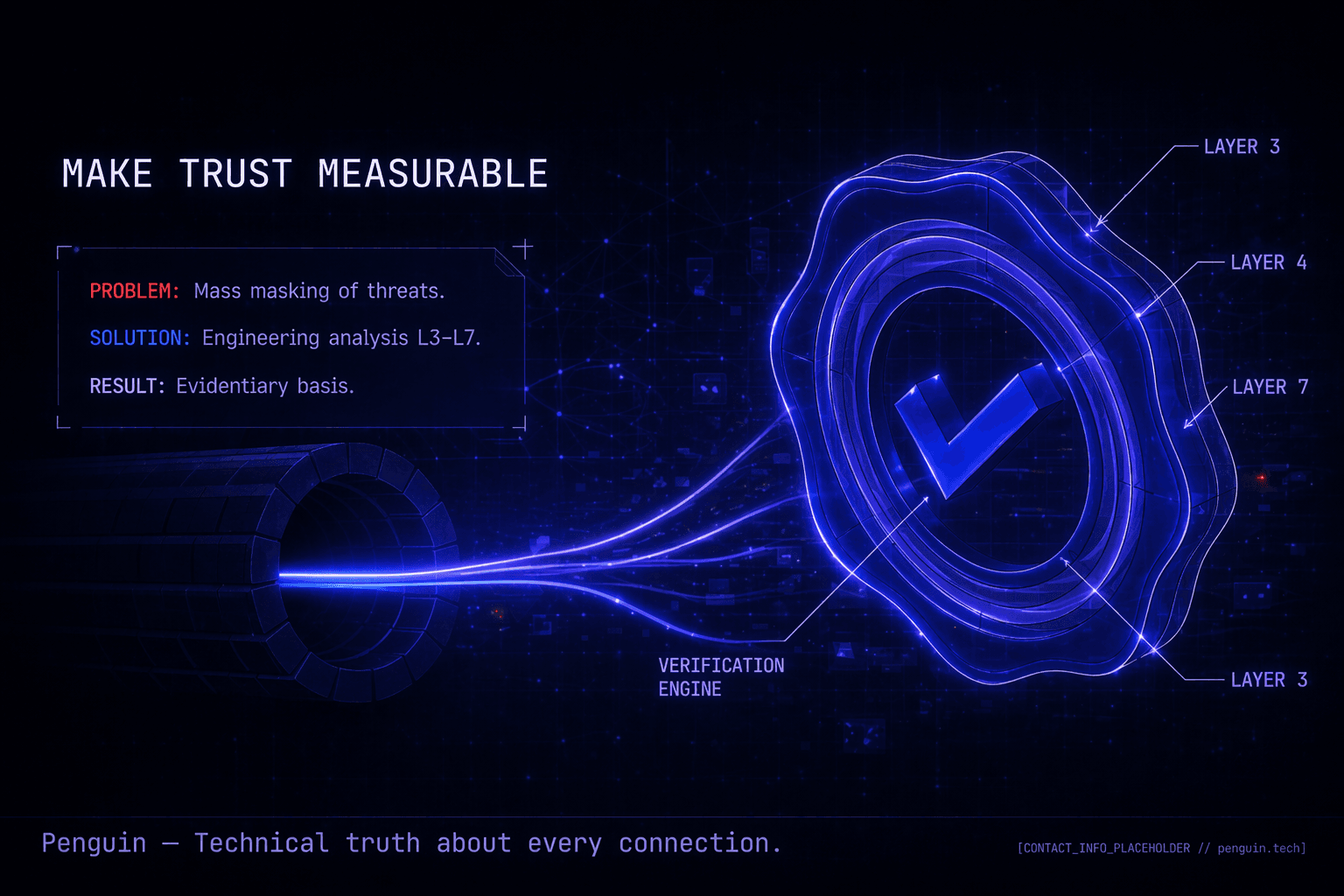

Escalating attack growth
Threat volume is no longer linear. Infrastructure-scale automation increases campaign velocity.
 Fraudnode
Infrastructure Anti-Fraud Platform
Fraudnode correlates TCP, TLS and HTTP fingerprints to reveal VPN, proxy chains, bot automation and synthetic infrastructure before authentication or scoring begins
Not who the user claims to be. Who they technically are.
Layer correlation L3-L7 • Deterministic signals • Millisecond decisioning
Fraudnode by Penguin Company
Problem
Modern attacks are no longer isolated incidents. They are automated, persistent, and infrastructure-driven - using proxy chains, VPN masking, bot automation, and large-scale vulnerability exploitation.
Detection must start before the transaction, before authentication, and before trust is assumed.
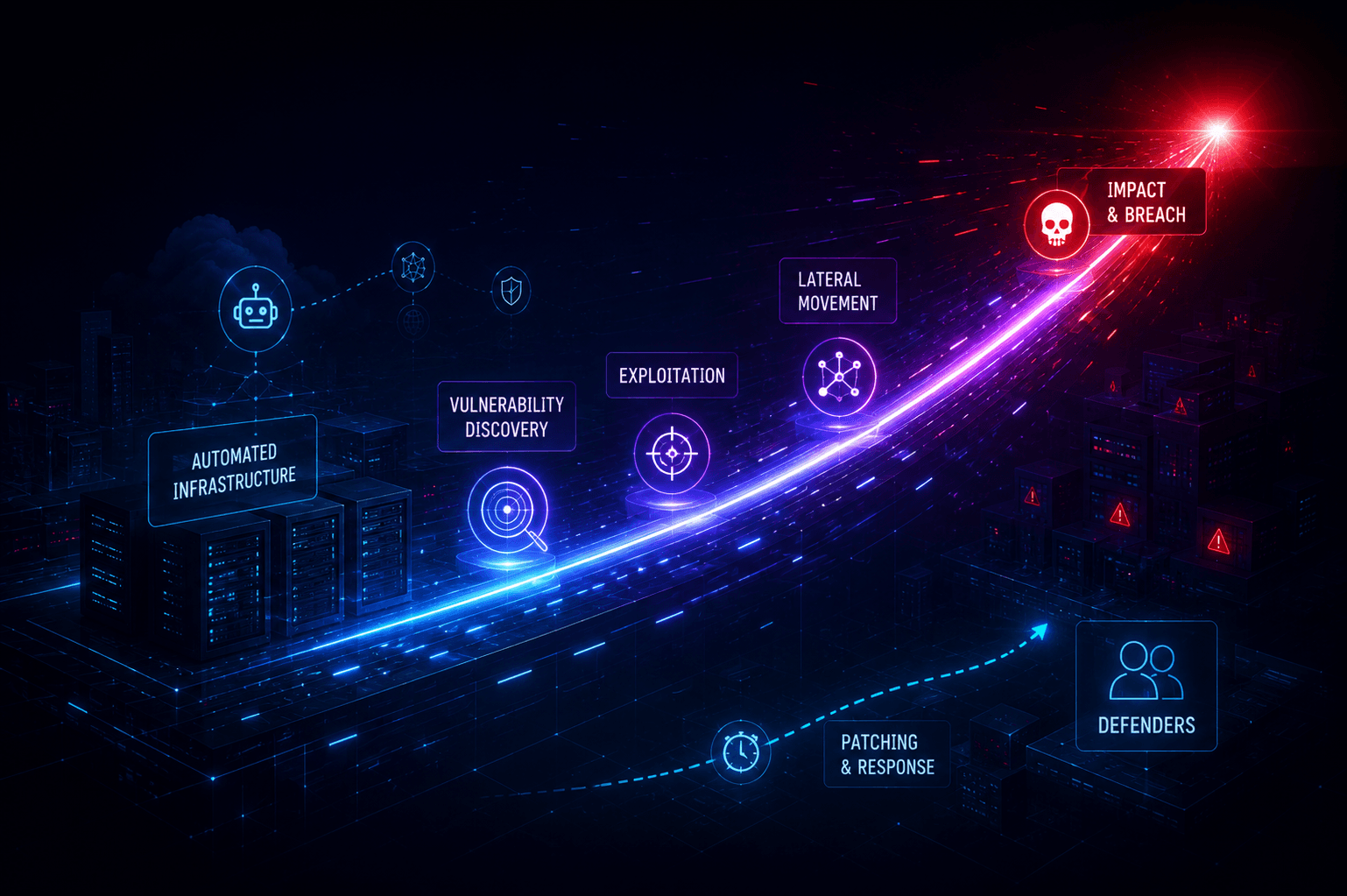
Threat volume is no longer linear. Infrastructure-scale automation increases campaign velocity.
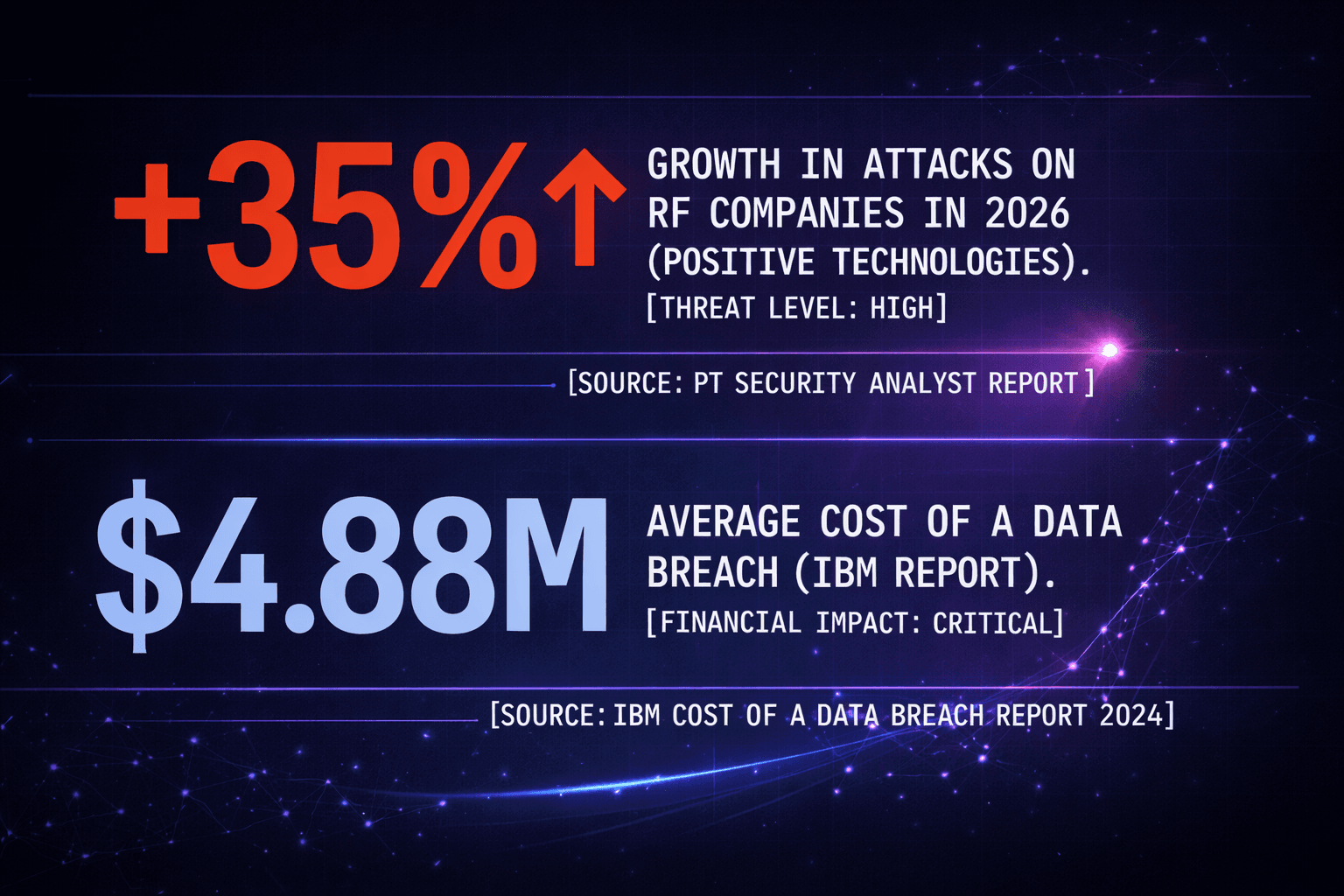
Adversaries operate as coordinated systems, not isolated actors, and sustain pressure over time.
Why legacy fails
Conventional security controls were built for visible threats: known IPs, obvious signatures, simple automation, static abuse patterns.
Modern attackers operate differently. They mask infrastructure, rotate identity, spoof the surface layer and keep enough consistency to pass shallow checks while remaining technically incompatible underneath.
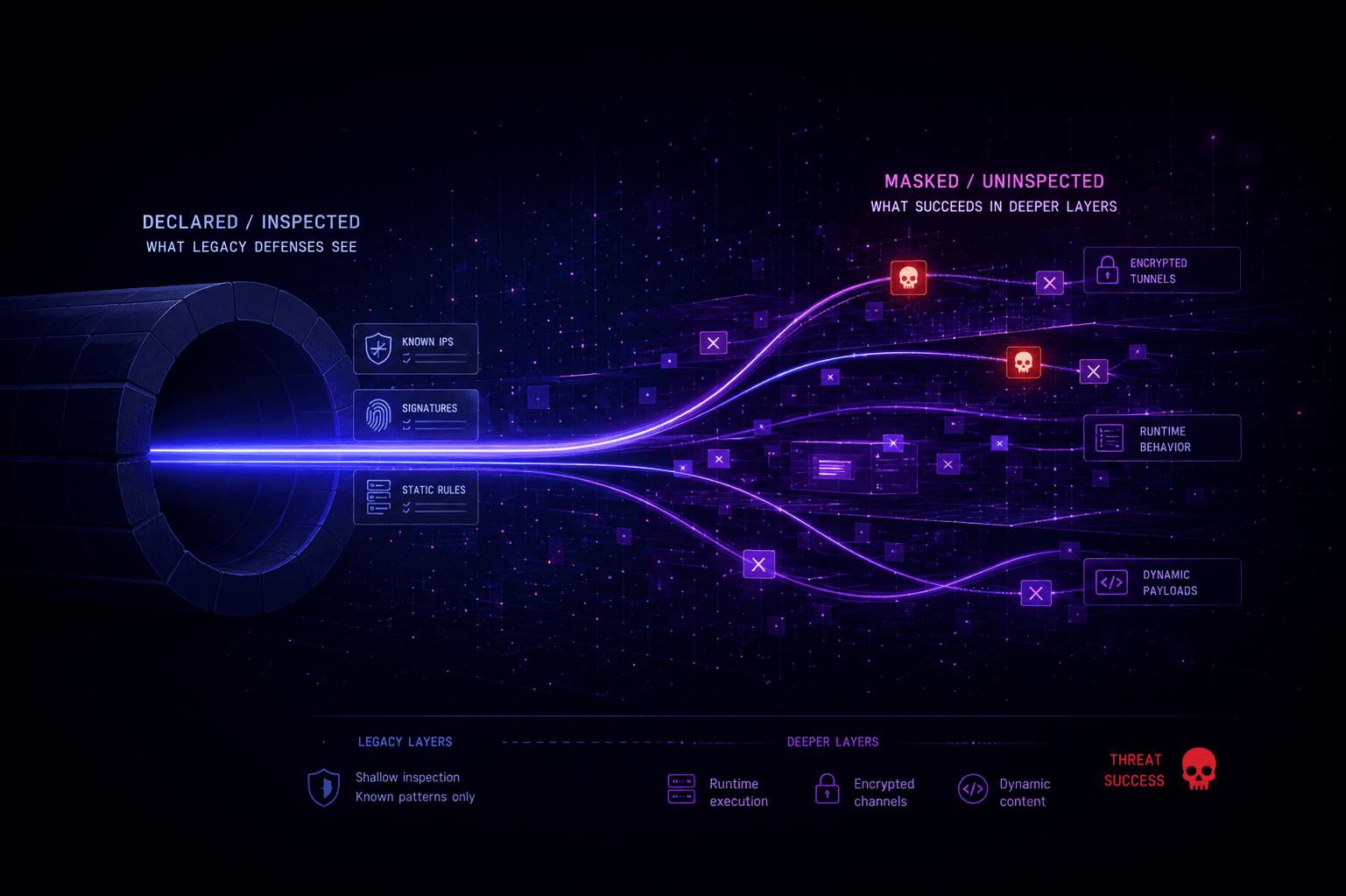
Result: suspicious traffic passes through because masking succeeds before enforcement begins.
Result: a confident score is not the same as a defensible technical verdict.
We do not need another black box. We need engineering evidence.
Fraudnode does not ask only what the session claims to be. It checks whether transport, cryptography and application layers agree.
Penguin philosophy
Attackers can spoof the surface. They can fake headers, rotate IPs, hide behind VPN chains and imitate browser behavior.
What is much harder is keeping the whole session technically coherent. Fraudnode checks whether transport, TLS and application signals still belong to the same real environment or only look convincing at first glance.
Low-level transport behavior reflects the originating system stack. Packet structure, TCP options, timing patterns and related characteristics usually follow stable implementation logic.
TLS negotiation carries fingerprints of client libraries, platform defaults and implementation details. It often reveals whether the cryptographic layer matches the environment the session claims to be using.
Application-layer behavior exposes how the client actually speaks: header order, protocol behavior, pseudo-header structure and engine-specific quirks.
What inconsistency looks like
If TCP says Linux, TLS looks like iOS, and HTTP behaves like a different browser engine, the session may still look legitimate on the surface but its stack no longer agrees with itself.
That is not randomness. That is signal.
An attacker can spoof the claim. It is much harder to spoof agreement across layers.
Fraudnode does not ask only who the session pretends to be. It asks whether the stack tells the same story at every layer.
This is why Penguin operates before identity, behavior and transaction logic: session integrity can be evaluated before trust is granted.
Platform Directions
Inspect fingerprint and network diagnostics in structured analysis pages.
Understand product logic, architecture, deployment modes, and future API flows.
Overlay typical VPN, proxy, and Tor paths onto your live checker collect.
Read product notes, case studies, and FAQ guidance for implementation teams.
Use cases
Fraudnode operates at the infrastructure layer, making it applicable across systems where masking, automation and identity spoofing are critical risks.
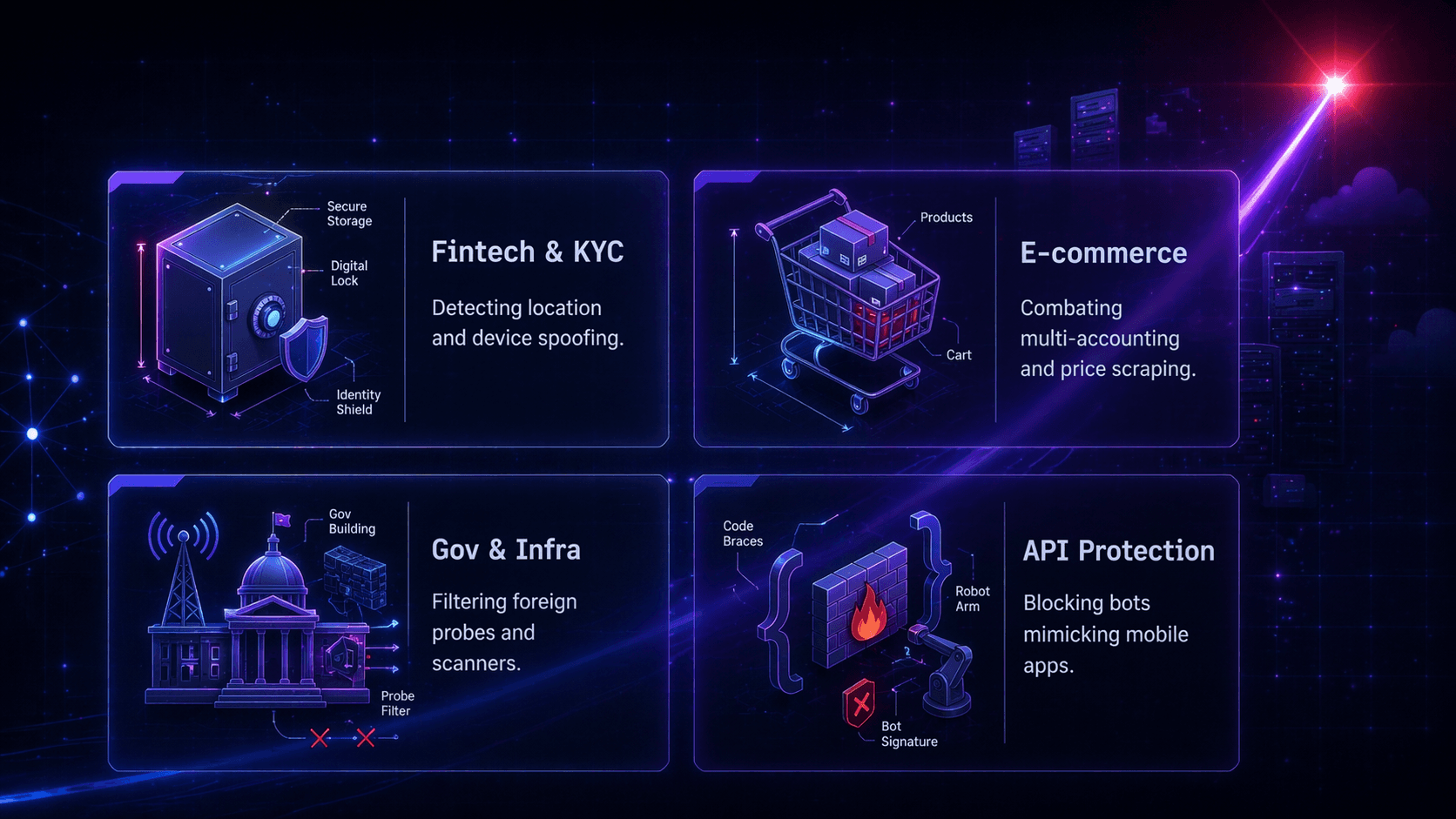
Detect identity spoofing and infrastructure masking during onboarding and authentication.
High risk. Regulatory pressure. Precision required.
Prevent multi-account abuse, scraping and automated exploitation.
Scale. Automation. Continuous pressure.
Filter foreign scanning activity and detect coordinated probing behavior.
Critical systems. High sensitivity. Persistent adversaries.
Detect non-human traffic and protect backend systems from synthetic clients.
Machine vs machine. Protocol-level validation.
Delivery
Fraudnode can be integrated directly into decision flows, analytical pipelines or investigation workflows.
Whether you need real-time verdicts or deeper session analysis, the system adapts to your architecture.
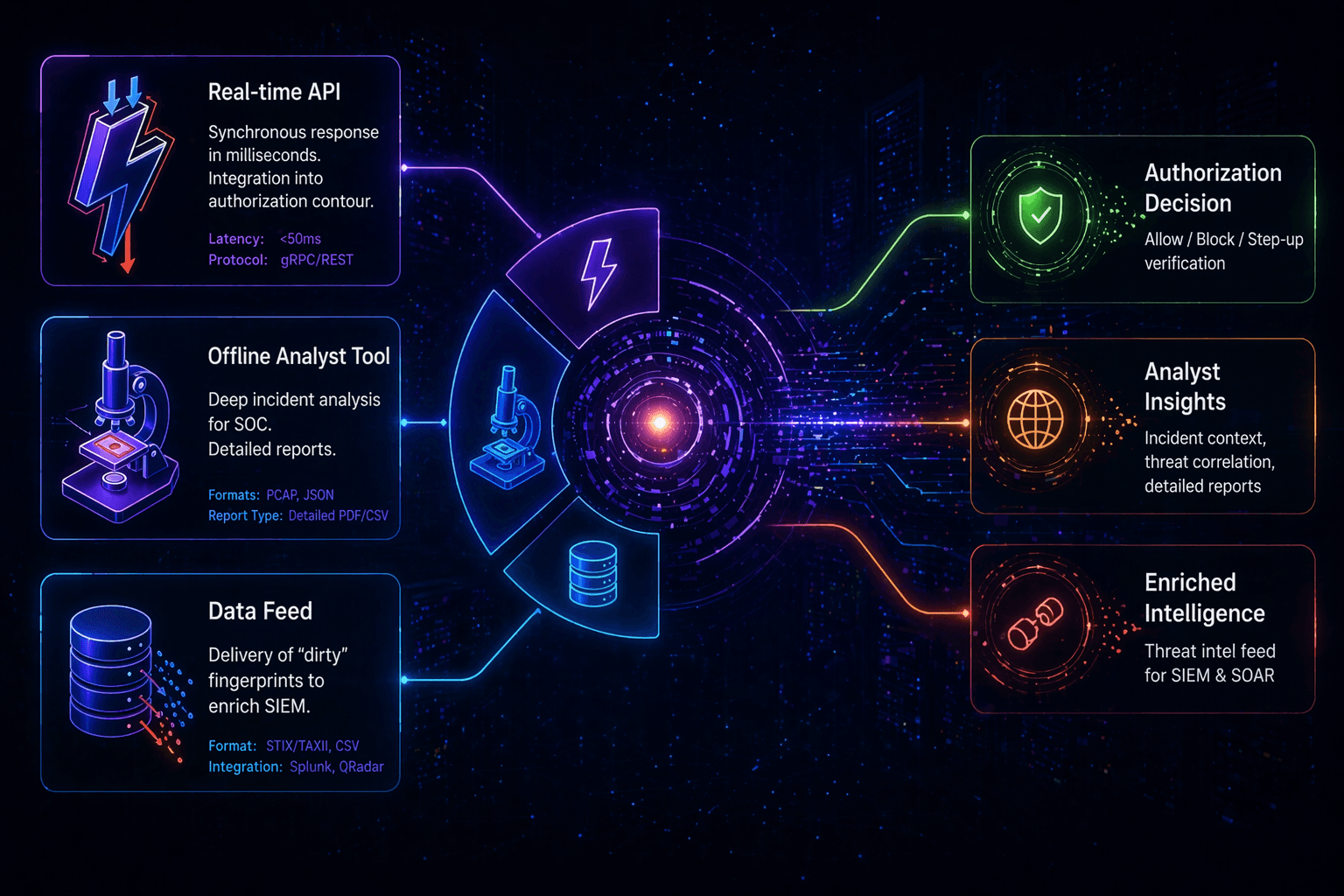
Inline session evaluation for authentication, transaction and access control flows.
{
  classification: "proxy",
  confidence: 0.94,
  signals: ["ttl_mismatch", "tls_profile_shift"]
}
Fast. Deterministic. Inline.
Deep inspection of session profiles for investigation and incident analysis.
Session drilldown
ID S-84AF1 • Risk tier: Elevated
TLS profile shift after handshake re-init
Region mismatch between transport route and locale hints
Automation confidence increased after canvas/runtime checks
Explainable. Transparent. Investigative.
Continuous stream of classified session data for SIEM, risk engines and analytics.
Live stream sample
09:42:18Z class=proxy_vpn score=0.91 route=edge-eu-2
09:42:19Z class=bot_automation score=0.87 route=edge-us-1
09:42:20Z class=clean_profile score=0.03 route=edge-eu-1
Scalable. Composable. System-level.
One engine. Multiple integration paths.
Architecture
Fraudnode processes a session as an evidence pipeline.
It starts at the gateway, parses transport and protocol signals, matches them against known detector logic, then routes the session through orchestration rules that classify proxy behavior, VPN masking, bot automation and other technical anomalies.
The result is not just a score, but a structured decision path.

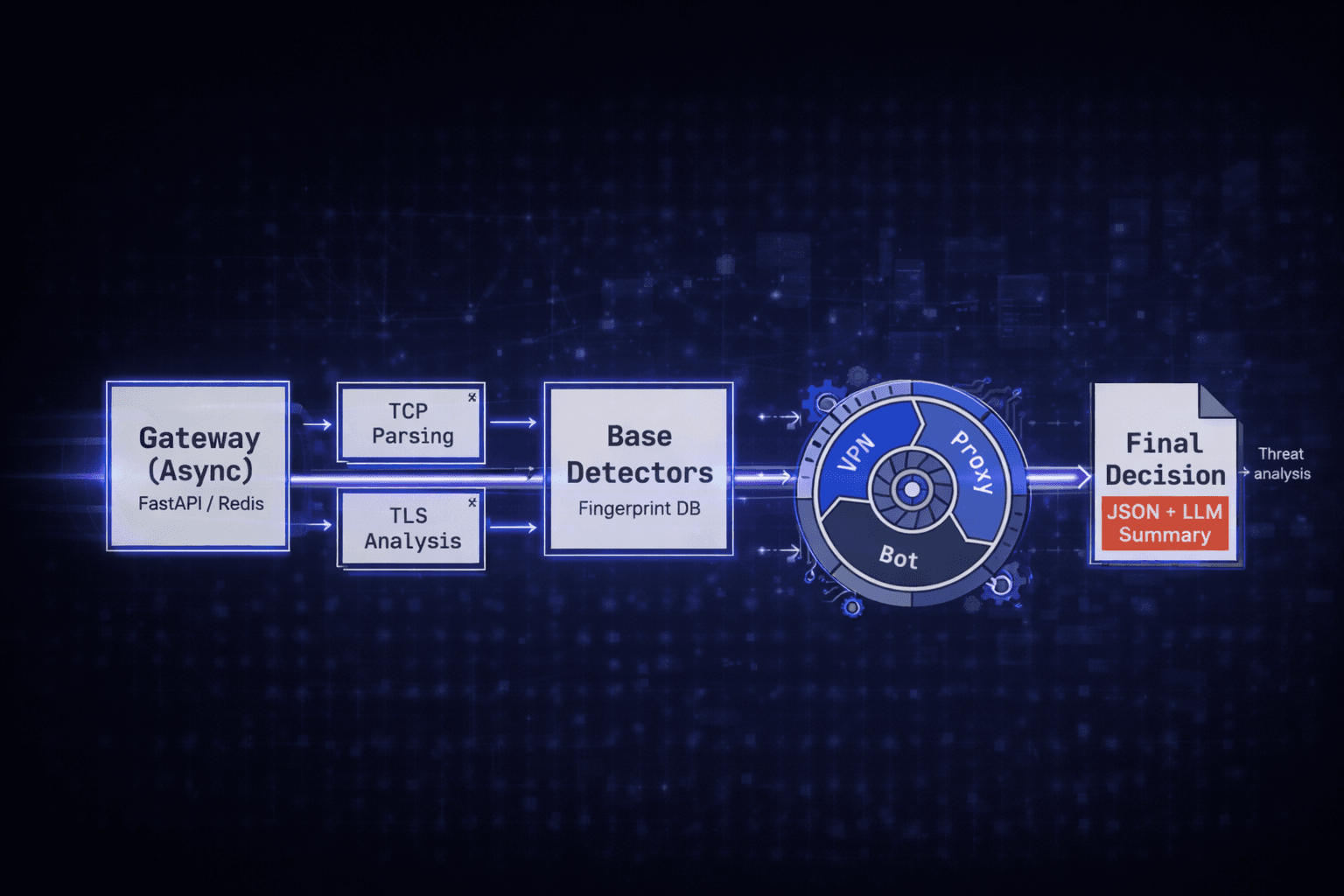
Asynchronous by design. Built to inspect thousands of sessions without adding user-facing friction.
Sessions enter through an asynchronous gateway layer designed for high-throughput handling without forcing blocking latency into the user path.
Fraudnode extracts transport, TLS and runtime-level attributes, including low-level protocol structure and client-side execution signals.
Parsed signals are compared against fingerprint logic and baseline detector knowledge, turning raw session data into normalized technical evidence.
The orchestration layer combines detector outcomes into higher-level classifications such as proxy, VPN, bot or layered inconsistency patterns.
Fraudnode returns a structured verdict that can be used in real-time response paths, analytics pipelines or analyst-facing investigation workflows.
This architecture allows Fraudnode to separate signal extraction, detector logic, classification orchestration and final response generation.
That separation makes the system easier to scale, tune and explain.
Signals
Fraudnode builds a client profile by correlating independent technical signals.
Transport behavior, cryptographic fingerprints, browser protocol traits, runtime environment and network context must remain consistent. Attackers can spoof one layer, but synchronizing all of them is significantly harder.
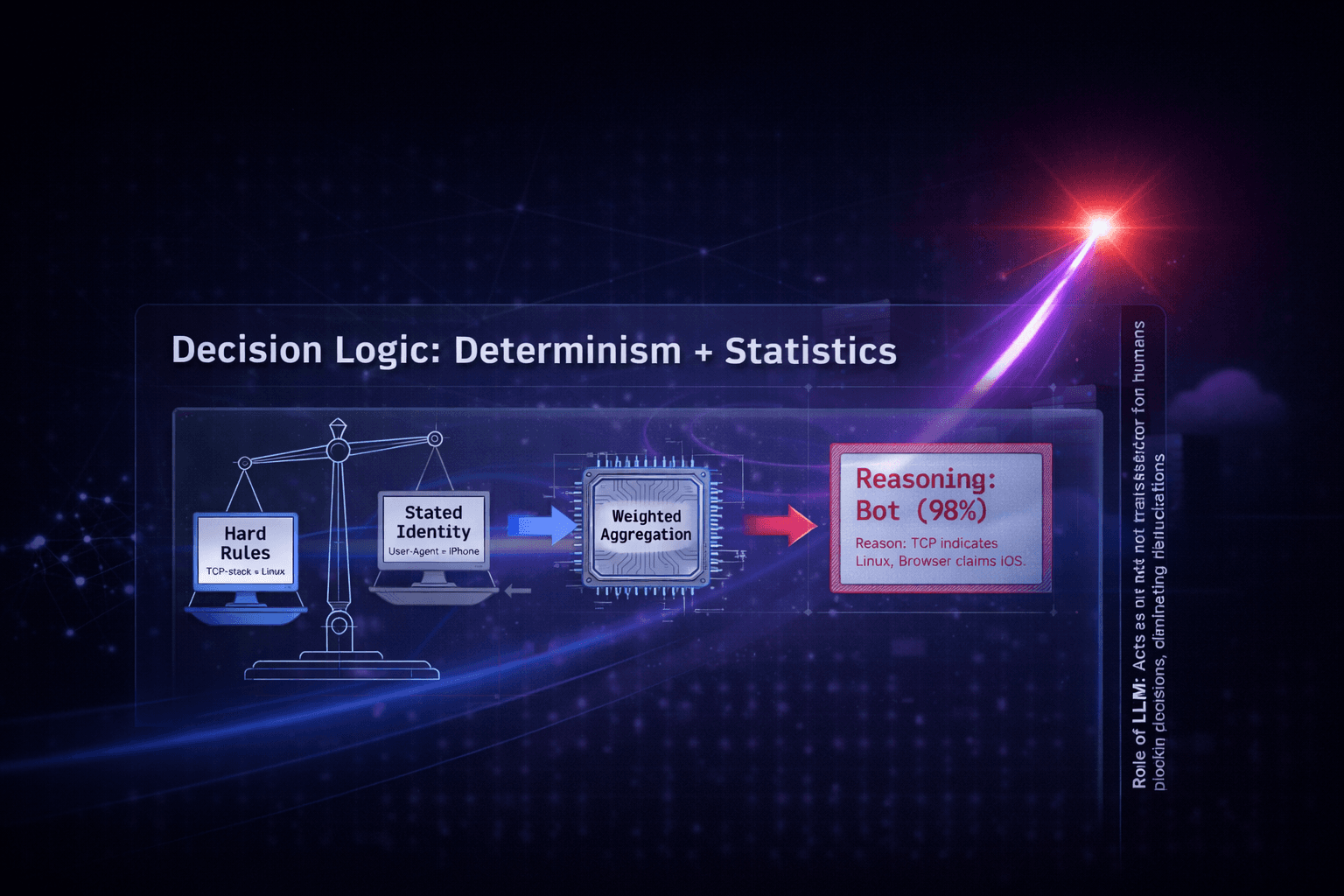
Network stack parameters provide strong hints about the real operating system and connection path.
Signals include TTL normalization, TCP options order, window scaling behavior, timestamp patterns, segment size and approximate route distance.
Cipher suite ordering, TLS extensions and elliptic curve preferences form distinct fingerprints for operating system, browser engine and client libraries.
Inconsistencies between transport and TLS layers are often strong masking indicators.
HTTP/2 pseudo-header structure, JavaScript runtime signals, WebRTC IP origin, DNS resolver behavior and geographic network context help validate whether the session profile remains coherent over time.
Fraudnode tracks this coherence as a system story, not as isolated observations.
A fingerprint is not a single value. It is a projection of the same client across multiple protocol realities.
Fraudnode correlates weakly related signal sources.
This reduces spoofing success probability, improves explainability, and enables graded risk classification rather than binary decisions.
Classification
Fraudnode evaluates cross-layer inconsistencies to determine the true nature of a session.

Validation
Session and IP counts below come from Fraudnode's historical Mongo corpus. They are not a live production SLA. Detection percentages from research notebooks stay off this strip so they are not read as a product promise.
1.9M+
Unique sessions in the historical research corpus (Mongo collect, on the order of two million rows).
227K+
Distinct IP addresses in that same corpus, across ISP and carrier-grade NAT paths.
Illustrative
Proxy and VPN hit rates from research runs on that corpus. Not a live SLA and not a dashboard guarantee.
Fail-closed
If analysis cannot finish, the product does not invent an allow. Site retries; merchants wait or pass.
Future
Network protocols are evolving.
With the adoption of QUIC and HTTP/3, transport, encryption and application behavior are becoming more tightly integrated, reducing visibility at traditional inspection points.
Fraudnode is designed to adapt by analyzing consistency across layers, not relying on static protocol assumptions.
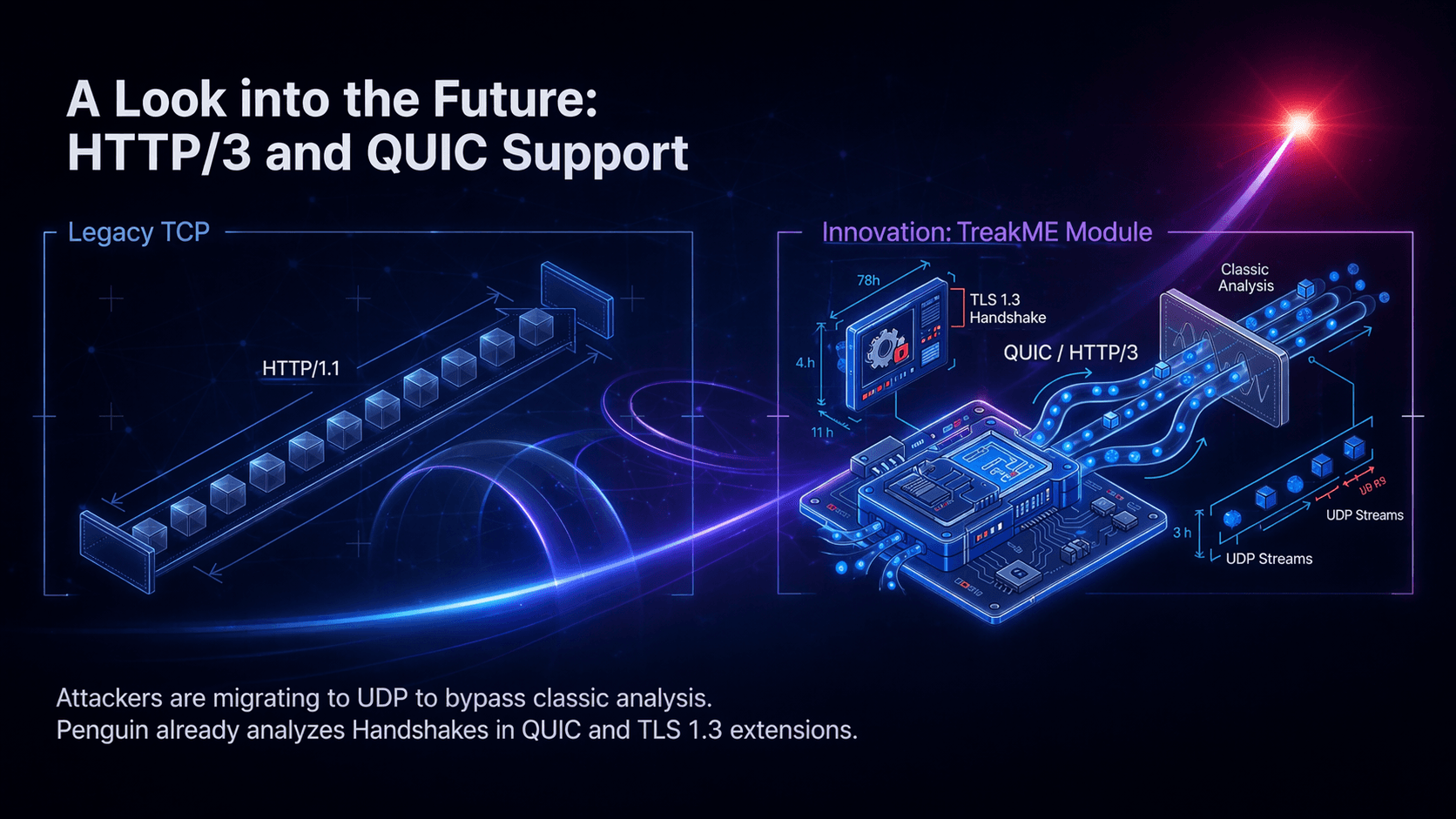
QUIC combines transport and cryptographic layers into a unified protocol, changing how signals are exposed and how session characteristics can be observed.
While this reduces traditional inspection surfaces, it introduces new forms of behavioral and structural fingerprints.
Fraudnode does not depend on a specific protocol version or implementation.
Instead, it evaluates whether observable properties across the stack remain internally consistent under real operating conditions.
The protocol may change.
Inconsistency does not.
Fraudnode does not depend on visibility.
It depends on consistency.
Future transport layers will hide more.
They will not align better.
Resources
The resolver is who the operating system asked. It can disagree with the TCP source, the JS timezone, and the User-Agent, and all of those answers can still be true.
Networking
SETTINGS, pseudo-header order, and the first HEADERS frame are chosen by the client library. That is why HTTP/2 still identifies a stack after the TLS handshake is over.
Read articleMobile fraud
Why mobile fraud detection must preserve continuity across device state, app profiles, network signals, behavior, and transaction history.
Read articleFinal CTA
Fraudnode evaluates session integrity before identity, before scoring and before transaction logic.
You can test it on your own traffic, or integrate it directly into your decision flow.
View technical overviewMeasure first. Decide later.
Fraudnode is not asking for belief.
It offers verification.