
Understanding Network Layers L3-L7 in Modern Security Systems
Intro
Modern security systems do not inspect "network traffic" as one flat stream. They correlate signals across multiple abstraction levels, from routing metadata to application behavior. This layered approach is the backbone of anti-fraud engines, API protection, intrusion detection, and behavioral analytics.
In practice, the difference between blocking a suspicious IP and catching a coordinated account takeover usually depends on one thing: which layer you analyze, and how well you connect those layers together.
Why the OSI Layers Still Matter
The OSI model is often treated as textbook theory, but Layers 3-7 remain one of the most practical frameworks for real defensive engineering.
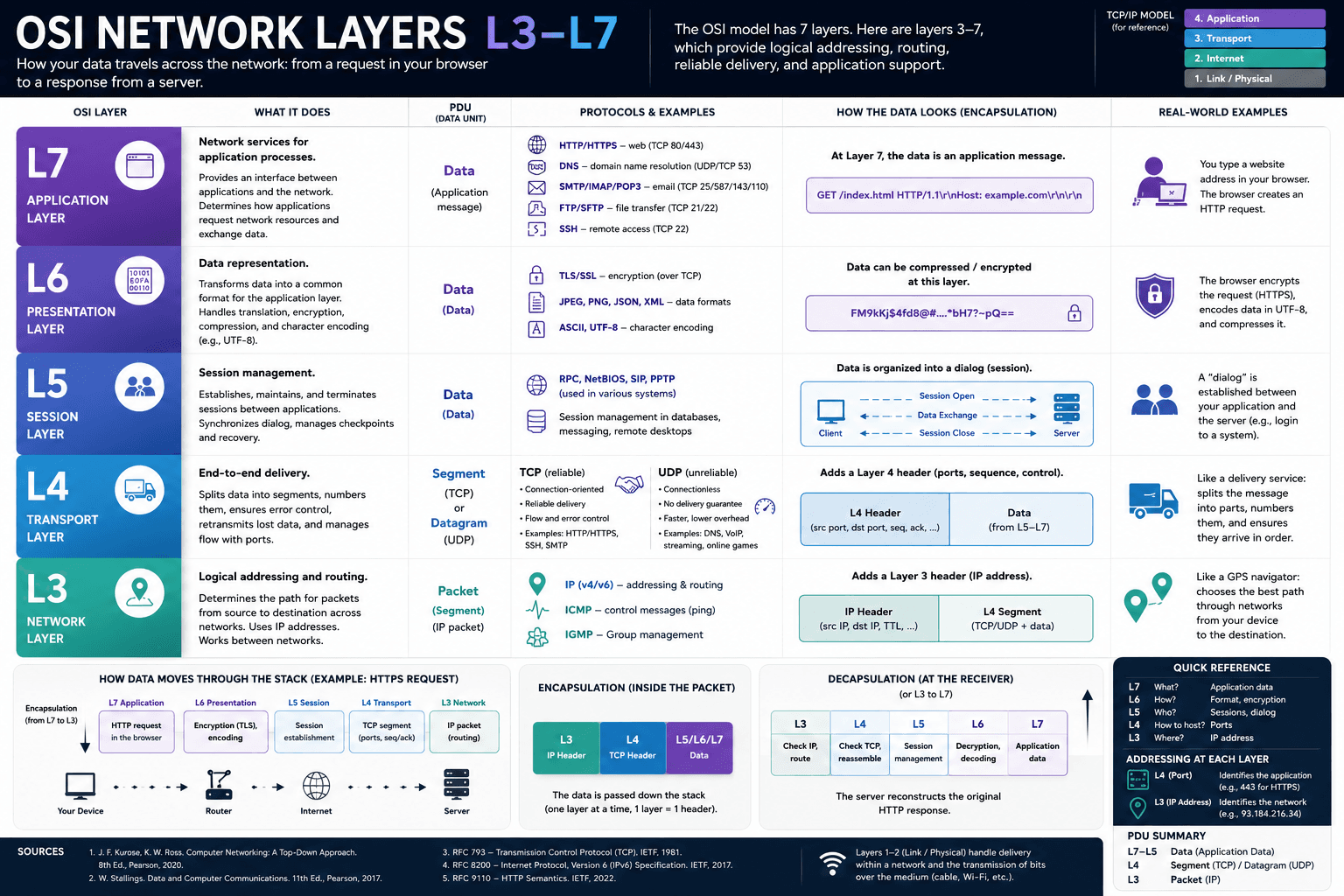
Layers 3–7 describe the logical path that application traffic follows through modern networks:
- Layer 3 decides where packets travel.
- Layer 4 defines how traffic is transported.
- Layer 5 preserves communication continuity.
- Layer 6 transforms and secures data.
- Layer 7 carries application intent and behavior.
A request to `https://hello_world.com/login` traverses all of these layers simultaneously. Security systems inspect different parts of this flow depending on what they are trying to detect. A firewall blocking an IP address primarily operates at Layer 3. A SYN flood mitigation system works at Layer 4. A TLS inspection gateway touches Layer 6. An anti-bot engine analyzing HTTP headers and browser fingerprints operates almost entirely at Layer 7. Understanding these distinctions helps explain why some attacks bypass traditional protection systems entirely.
Layer 3: the Network layer
Layer 3 is responsible for logical addressing and routing. Its primary job is determining how packets move between networks. This is where IP addresses exist. Routers, VPN gateways, BGP infrastructure, cloud networking systems, and many firewall policies rely heavily on Layer 3 information. At this level, traffic is still relatively “blind” to application content. The system knows where traffic comes from and where it is going, but not necessarily what the traffic contains.
Protocols commonly associated with Layer 3 include:
- IPv4 / IPv6
- ICMP
- IGMP
When a user visits a website, Layer 3 determines the route packets take across the internet. Each router only needs to know the next destination hop, not the meaning of the payload itself. This layer is critically important for security because many attacks can already be identified before application inspection even begins.
Examples include:
- IP reputation analysis
- GeoIP filtering
- ASN-based restrictions
- Traffic blackholing
- DDoS routing mitigation
- VPN and proxy detection
Modern anti-fraud systems often begin their analysis at Layer 3 by evaluating the source network. Requests originating from residential ISPs behave differently from requests originating from cloud datacenters. That distinction alone can dramatically affect risk scoring. However, Layer 3 visibility has limitations. An IP address cannot reveal whether a request is malicious, automated, or legitimate. Sophisticated attackers frequently rotate IP addresses, abuse residential proxies, or tunnel traffic through legitimate infrastructure.
As a result, modern protection systems rarely rely on Layer 3 alone.
Layer 4: the Transport layer
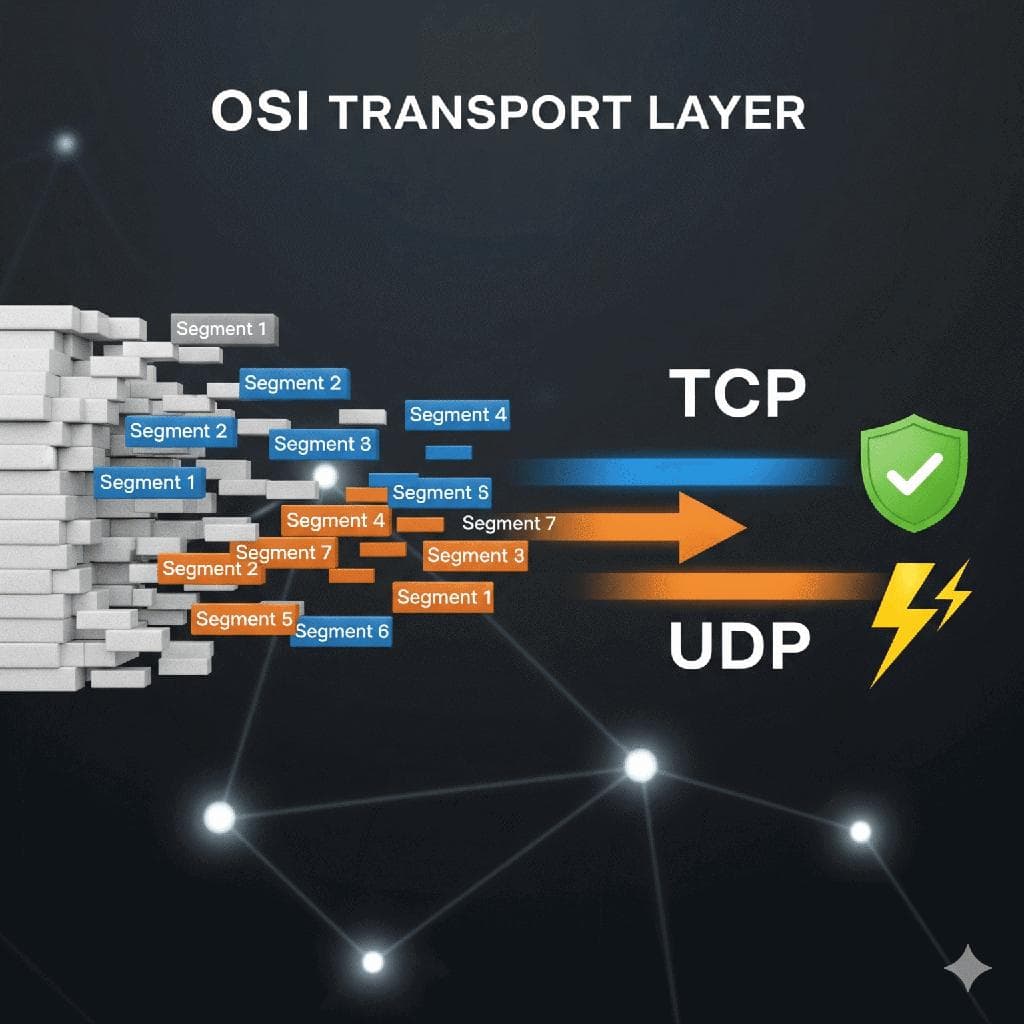
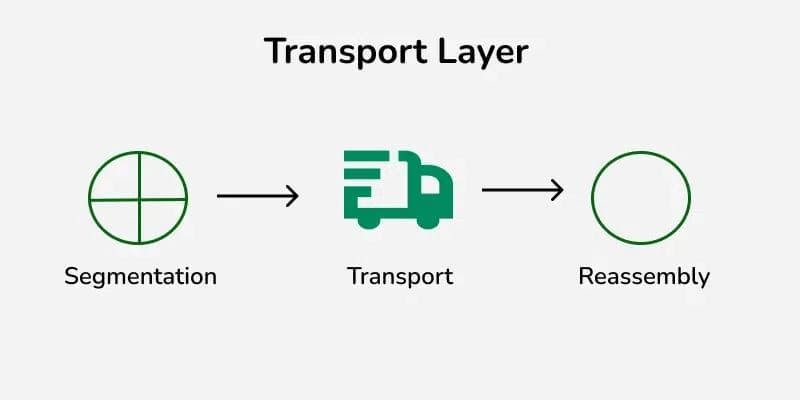
Layer 4 introduces reliable communication between hosts. Its primary responsibility is transporting data streams between processes and applications. This layer manages segmentation, ordering, retransmission, flow control, and ports.
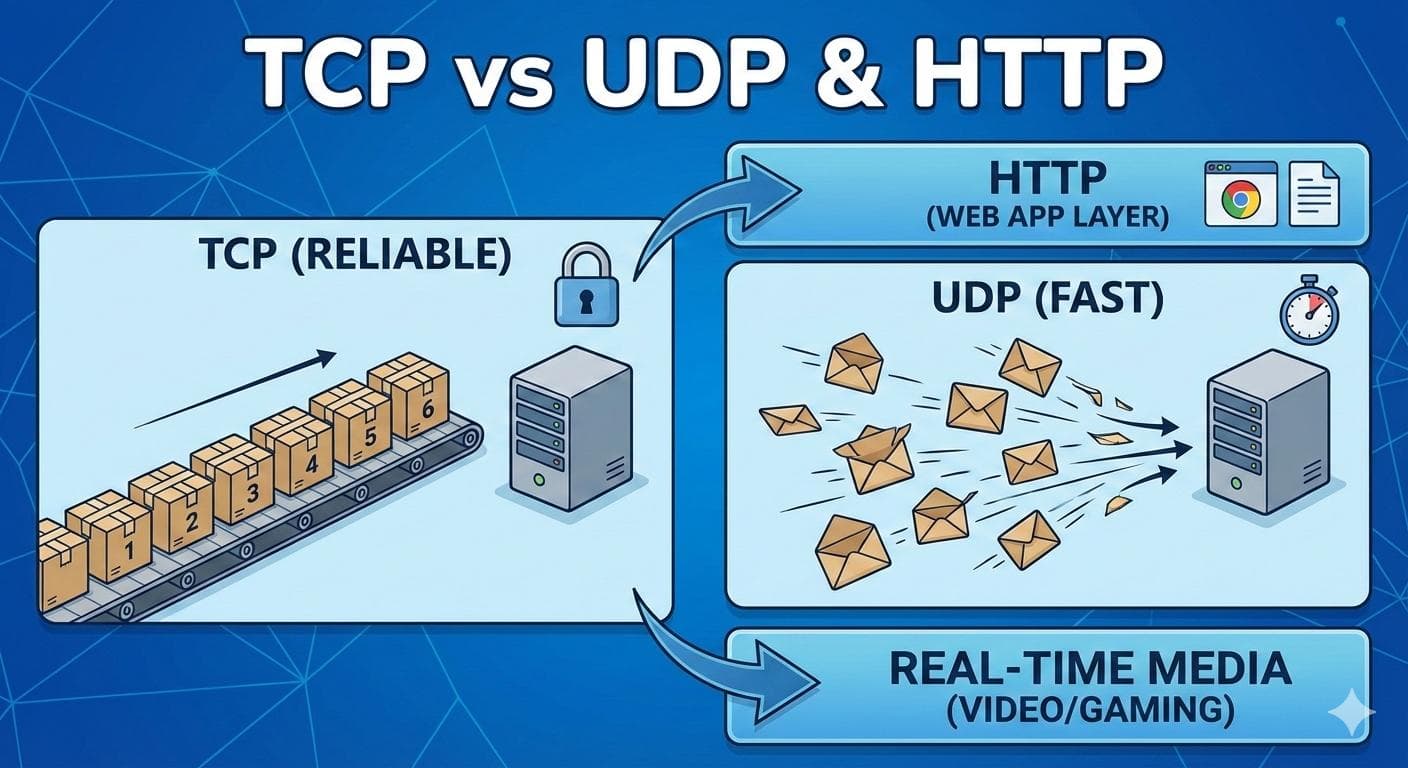
The two dominant protocols here are TCP and UDP.
- TCP is connection-oriented. It guarantees ordered delivery and reliability through acknowledgments, retransmissions, and state tracking. Most web traffic relies on TCP because browsers and APIs require reliable communication.
- UDP, in contrast, prioritizes speed and low overhead. It does not guarantee delivery or ordering. Streaming systems, VoIP platforms, online games, and DNS queries frequently rely on UDP because latency matters more than reliability.
From a security perspective, Layer 4 is where traffic begins to acquire behavioral characteristics. A TCP connection contains metadata such as:
- source port
- destination port
- sequence numbers
- flags
- retransmission patterns
- connection timing
These details are extremely valuable for network analytics.
Transport-layer analysis is heavily used in:
- DDoS mitigation
- SYN flood detection
- rate limiting
- stateful firewalls
- connection fingerprinting
- traffic anomaly detection
Modern anti-bot systems also leverage Layer 4 telemetry indirectly. Even before decrypting traffic, systems can analyze connection establishment patterns, RTT behavior, packet timing, and TCP stack characteristics. Some advanced fingerprinting systems can even infer operating systems or automation frameworks by analyzing TCP behavior alone. This is one reason why naive traffic spoofing often fails. Reproducing realistic transport-layer behavior is significantly harder than copying HTTP headers.
Layer 5: the Session layer
The Session Layer is often overlooked because modern TCP/IP implementations partially merge its responsibilities into application frameworks and transport protocols. Nevertheless, the concept remains important. Layer 5 is responsible for establishing, maintaining, and terminating communication sessions between systems. In practical terms, a “session” represents continuity.
This could mean:
- a logged-in user session
- a persistent API connection
- a WebSocket channel
- an authenticated communication state
- a remote desktop session
Without session management, every request would behave as an isolated interaction. Modern anti-fraud systems rely heavily on session analysis because malicious behavior often only becomes visible over time. A single HTTP request may appear harmless. A sequence of requests across an authenticated session may reveal automation, scraping, credential stuffing, or account takeover attempts.
Session-layer analytics commonly include:
- token lifecycle analysis
- session reuse detection
- abnormal login flows
- concurrent session anomalies
- impossible travel events
- behavioral continuity checks
For example, if a session suddenly changes ASN, browser fingerprint, TLS signature, and geolocation within seconds, the system may treat the session as compromised.
Layer 5 is also deeply connected to modern authentication systems. OAuth flows, SSO platforms, JWT lifecycles, and API session persistence all depend on maintaining state across multiple interactions. From a defensive standpoint, breaking malicious session continuity is often more effective than blocking individual requests.
Layer 6: the Presentation layer
Layer 6 transforms data into a format applications can understand. Historically, this included character encoding, serialization, compression, and encryption. In modern networks, Layer 6 is strongly associated with TLS/SSL encryption. This layer is particularly important because most internet traffic today is encrypted. Without Layer 6 processing, modern security systems would effectively be blind.
TLS negotiation itself exposes useful metadata:
- cipher suites
- JA3/JA4 fingerprints
- ALPN negotiation
- TLS versions
- extension ordering
These characteristics are widely used for traffic fingerprinting. Many anti-bot and anti-fraud platforms identify automation frameworks through TLS behavior alone. Headless browsers, poorly implemented proxy stacks, and custom HTTP clients frequently expose abnormal TLS signatures. This is why sophisticated scraping tools attempt to mimic real browser TLS stacks as closely as possible.
Layer 6 also matters for data serialization and encoding. Formats such as:
- JSON
- XML
- Protocol Buffers
- MessagePack
- UTF-8 streams
all exist conceptually within the presentation domain.
Improper handling of encoding and serialization frequently leads to vulnerabilities, including:
- deserialization attacks
- parser confusion
- encoding bypasses
- Unicode normalization issues
In practice, Layer 6 acts as the translation boundary between raw transport data and meaningful application content.
Layer 7: the Application layer
Layer 7 is where users actually interact with systems. HTTP requests, API calls, DNS queries, authentication flows, browser behavior, and application logic all exist at this layer. For security teams, Layer 7 is often the most valuable — and the most complex — layer to analyze. Unlike lower layers, Layer 7 contains semantic meaning.
At this level, systems can understand:
- request paths
- cookies
- headers
- API methods
- payload structures
- browser fingerprints
- user behavior
- authentication flows
This is where modern anti-fraud platforms operate most aggressively.
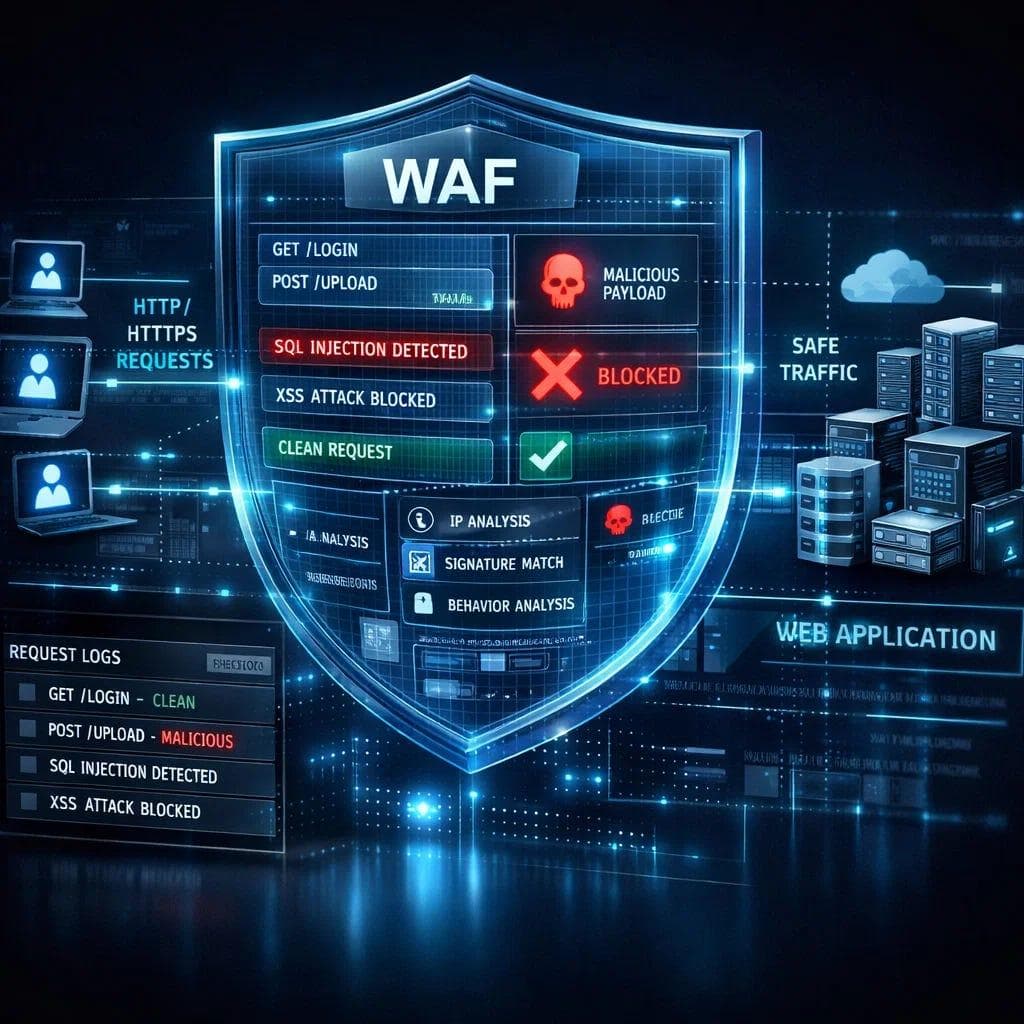
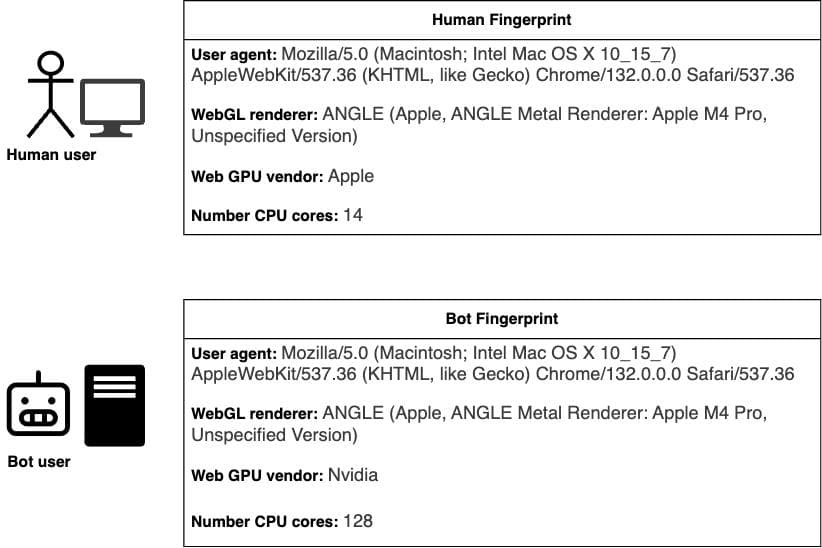
A Layer 7 security engine may evaluate:
- browser entropy
- JavaScript execution
- behavioral timing
- mouse movement
- request sequencing
- API abuse patterns
- credential reuse
- CAPTCHA interaction
- automation artifacts
Traditional firewalls generally cannot see this context. This is why Layer 7 attacks remain extremely common:
- credential stuffing
- account takeover
- scraping
- bot abuse
- API exploitation
- business logic attacks
A request may appear completely legitimate at Layers 3 and 4 while being obviously malicious at Layer 7. For example:
- the IP address may belong to a residential ISP,
- the TCP handshake may look normal,
- TLS fingerprints may appear valid,
yet the HTTP behavior may reveal automated account enumeration.
This is precisely why modern defense systems increasingly focus on behavioral analysis rather than static signatures.
Why layer correlation matters
The most effective security systems do not analyze layers independently. They correlate information across multiple layers simultaneously.
A modern anti-fraud engine may combine:
- Layer 3 IP intelligence,
- Layer 4 transport telemetry,
- Layer 5 session continuity,
- Layer 6 TLS fingerprints,
- Layer 7 behavioral analysis
into a unified risk model.
This multi-layer correlation is what makes modern detection systems significantly more effective than traditional rule-based filtering. Attackers often succeed at spoofing one layer. Mimicking all layers consistently is far more difficult. A bot can fake HTTP headers. Simulating realistic TCP behavior, browser TLS fingerprints, session continuity, and human interaction timing simultaneously is substantially harder. This is the core principle behind advanced behavioral security systems.
Final thoughts
The OSI model is not merely a classroom concept. In modern infrastructure and anti-fraud engineering, it remains one of the clearest ways to understand how systems communicate — and how attackers exploit them.
Layers 3 through 7 represent progressively richer levels of context:
- routing,
- transport,
- sessions,
- encryption,
- application behavior.
The higher the layer, the more semantic understanding becomes possible. The lower the layer, the closer analysis gets to raw network mechanics. Modern security depends on both. A resilient defense system is not built around a single firewall rule or a single HTTP signature. It emerges from visibility across the entire communication stack.